Nathan James Norman
  • Blog
  • Writer
  • Pastor
  • Bookshelf
  • Links
  • Contact

Nathan James Norman

Husband. Father. Pastor.
Storyteller. Reader. Comic Fan.
Slave of the Lord Jesus Christ.

First Baptist Church of Tarrytown

The Good in Moral Decay

5/12/2013

0 Comments

 
Picture
The moral decline in America is leading to good things.

It is evident that the increase in permissiveness, the abandonment of sexual ethics and the celebration of sin is being championed by Sin, Satan and the World. The American church is in decline and Christianity is largely unacceptable in the West.

So why is this a good thing? What grace can come from the rapid moral decline we've seen recently?

I have to confess, I was thinking about all this in light of Romans 8:28 (We know that all things work together for the good of those who love God: those who are called according to His purpose.) during the largely uninteresting Iron Man 3. And I really think there are great goods.

What good can come from the marginalization of Christianity and the systematic infringement on religious liberty?

1. It forces Christians to actually consider our sexual ethics. What is the purpose of marriage? Of sex? Of romance? Of procreation? Why does God put such limitations on human sexuality? Are these limits morals repressive, or protective and freeing? How does God view divorce? Over the last sixty years the church has, in general, done a poor job of celebrating healthy sexuality and navigating people through sexual sin. The current climate helps us to consider all these issues.

2. It gets rid of wolves (masquerading as sheep). Individuals who come into the church with an agenda, looking for power, and trying to grab power will be greatly minimized. There is little cultural power to be had among a group of despised and marginalized individuals. Certainly, wolves will still run around in the churches . . . but there will be far less of them.

3. It forces the Church to focus on evangelism and discipleship. Let's face it, far too often the church and her members focus on things that don't really matter too much. We spend money on sound systems and furniture far in excess to what we expend on bringing the good news to those who need it.

4. It eliminates toxic churches. This one is really harsh. But there are some really awful churches out there teaching either false doctrine or false practices (or both)! As Christianity's influence declines, these churches will not be able to survive as their members and finances dry up.

5. It helps the Church rediscover grace. When sin is kept to a minimum because of Christianity's influence on the culture, it is far too easy for believers to lapse into legalism (and condemnation). Now that we are surrounded by so much open sin, believers are faced with a decision. We can summarily damn the vast majority of people we interact with, or we can be like Jesus and meet people wherever they're at . . . and love them like Jesus loves us.

6. It makes stronger believers. By and large believers are going to rise up to the challenge they face, rely on the strength of the Holy Spirit and become stronger followers of Jesus Christ.


What other good things might come from moral decline? How else does God work in the midst of darkness?


0 Comments

Why Join a Small Church?

5/2/2013

0 Comments

 
Picture
We need churches of all sizes to make disciples. Small, medium and large churches all have their own strengths and weaknesses. I’ve served in churches of all three sizes and now pastor at a small church.

In our “bigger is better” culture many people walk into a congregation of 20-100 and never return. If they were any good, after all, wouldn’t they be larger?

But what healthy small churches lack in numbers, they make up in many other ways. So, why join a small church?

1. Highly Relational: Small churches value relationships. Both introverts and extroverts can start building deep, meaningful relationships in small churches within a short amount of time.

2. Family: The small church sees itself as a family. While there are some uncomfortable squabbles in families, a healthy small church’s strength is in the mutual care and love they have for each other. An entire family or an individual can join a small church and find themselves fully embraced by the family of God.

3. Pastoral Access: If you have a burning theological question, something in the sermon struck you, or you just need to talk, a small church pastor is readily accessible. You won’t have to go through a long vetting process or wrestle for his time. If you need to talk, there’s usually time in the week to have a good conversation.

4. Ownership: In small churches every member has ownership in the church. While all churches belong to God, in a small church the sense that God has called each member to a mission to reach others with the gospel is hyper-immanent. There is no large staff to accomplish the great commission, just the members!

5. Discipleship: Because of the relational nature of a small church and the close proximity everyone has to each other, the church has no choice but to allow the older to train the younger and be a multi-generational church. With a little bit of structure, discipleship flourishes.

6. Service Opportunities: In small churches, every member really is needed! The disciple-making mission of the church can’t happen unless everyone is helping. Because of this, there are service opportunities for those who want to serve. Has God called you to music? There’s a need in a small church! Has God called you to teach? There’s a place for you to teach! In fact many of the pastors of some of the larger and more influential churches in America grew up in small churches where they had the opportunities to serve in areas that would be closed to them in a larger church.  

7. Built for Multiplication: Small churches know how to operate with the bare-minimum. Because of this, as a small church grows larger, they have a tremendous opportunity to send a large portion of their congregation across town and start a new church to reach new people and make new disciples! America needs more healthy churches. And more churches, reaching more people is always a good thing!

Healthy, bible-based churches of all sizes are needed. Small churches are vital to the health of the Universal Church. So, if you’re looking for a church, consider joining a healthy small church!


0 Comments

A Prayer for Boston

4/15/2013

1 Comment

 
Picture
It seems to me that during tragedies Psalm 7 is a good text to pray through.

During these times of national and personal calamities we experience a plethora of emotions. We feel scared for our safety. We feel anger toward those who committed the evil. We feel vulnerable. We want justice. We want answers. We ask: “Why?”

Today, like so many other days, none of us have answers to satisfy our aching hearts. But we can pray. Please pray with me today this prayer adapted from Psalm 7. I think this psalm covers a wide range of our emotions today.

Pray:

Lord, God we seek protection from you,
keep us safe from violent people.
Rescue us. Rescue Boston. Rescue our country.

Lord, this was evil and we’re scared.
But we’re also angry that this happened.

We know that evil acts also anger you
because you love justice.
Please let justice come swiftly,
and peace return to the injured,
the families of the dead,
the city of Boston,
and our country.

Be our shield and protection.
Everything you do is right.
Search me, search us
and transform us into upright people in Jesus Christ.

We turn away from our selfishness,
and turn our hearts, minds and souls to you.

Bring your justice quick.
Let those who seek to do evil,
be undone by their own schemes.

Thank you Lord.
Fill us with the hope that even though it doesn’t seem like it
in Jesus,
every wrong will be made right.
Amen.  


Psalm 7

A Shiggaion of David, which he sang to the Lord concerning the words of Cush, a Benjaminite.

Yahweh my God, I seek refuge in You;
save me from all my pursuers
and rescue me
or they will tear me like a lion,
ripping me apart with no one to rescue me.

Yahweh my God, if I have done this,
if there is injustice on my hands,
if I have done harm to one at peace
with me
or have plundered my adversary
without cause,
may an enemy pursue
and overtake me;
may he trample me to the ground
and leave my honor in the dust.  Selah

Rise up, Lord, in Your anger;
lift Yourself up against the fury
of my adversaries;
awake for me;
You have ordained a judgment.
Let the assembly of peoples gather around You;
take Your seat on high over it.

The Lord judges the peoples;
vindicate me, Lord,
according to my righteousness
and my integrity.

Let the evil of the wicked come
to an end,
but establish the righteous.
The One who examines the thoughts
and emotions is a righteous God.
My shield is with God,
who saves the upright in heart.
God is a righteous judge
and a God who shows His wrath
every day.

If anyone does not repent,
God will sharpen His sword;
He has strung His bow
and made it ready.
He has prepared His deadly weapons;
He tips His arrows with fire.

See, the wicked one is pregnant with evil,
conceives trouble, and gives birth
to deceit.
He dug a pit and hollowed it out
but fell into the hole he had made.
His trouble comes back
on his own head,
and his violence falls on the top
of his head.

I will thank the Lord for His righteousness;
I will sing about the name of Yahweh
the Most High.

1 Comment

Georgia Schools and Ethics Class

4/12/2013

0 Comments

 
Picture
Undoubtedly, you've heard about the Atlanta, Georgia public school cheating scandal.

As CNN Reports:

In what has been described as one of the largest cheating scandals to hit the nation's public education system, 35 Atlanta Public Schools educators and administrators were indicted Friday on charges of racketeering and corruption.
[. . .]
About 180 teachers were initially implicated in the scandal.
[. . .]

For at least a period of four years, between 2005 and 2009, test answers were altered, fabricated and falsely certified, the indictment said.

Hall [the former superintendent] allegedly oversaw a system where threats and intimidation were used against teachers, it said.

"As a result, cheating became more and more prevalent," the indictment said.

By the time the 2009 Criterion-Referenced Competency Tests, as the standardized test is known, was administered in Atlanta Public Schools, "cheating was taking place in a majority of APS's 83 elementary and middle schools."

The cheating dated back all the way to 2001. And it became a normal task in the Atlanta Public Schools.

While the courts need to be allowed to make judgments in this case, I have one question: How could this have happened?

Didn't someone think this was wrong? Why didn't someone try and blow the whistle on this earlier?

I don't have an answer. I wasn't there and I'm not terribly interested in researching the topic. But one thing occurred to me while I was thinking through this news story. Do teachers have to take a professional ethics class as a part of their education and certification?

I asked my wife about this because she has been a licensed elementary teacher in New York, California and Michigan. And in her education, there was no ethics class for her major.

Now, I don't know if other colleges or states require an ethics class for primary or secondary teachers, but they should! Almost every other profession I can think of requires some sort of ethics class and/or training. Pastors, lawyers, doctors, many of the sciences, etc., all require professional ethics training as a part of their program.

Now, I'm not teacher-bashing here! I love teachers! My mother is a teacher at a public school and I married a public school teacher!

But it seems to me the teachers need to be given the tools of an ethics class, tailor-made for their profession, because right now the ethics of the Atlanta Public Schools consisted of doing whatever the superintendent wanted.

I'm wondering if any teachers reading this have had a professional ethics class or training. Do you have a different take on this story? (And you probably do have a better perspective than me!)
0 Comments

Why TV Dating Relationships Fail

4/9/2013

2 Comments

 
Picture
More or less, this is how strong relationships are built . . . right?


I just heard Eva Longria comment about how the majority of "dating show" marriages end in ruin and breakup. She further went on to say that her new show, Ready for Love  would be different because it would use professional matchmakers to bring together people who want to get married.

Well, ever since hearing that sound clip (and seeing the show promo) I really don't think there is anything different from this show and The Bachelor, The Bachelorette, Love in the Wild  or Battlestar Galactica! (Just kidding about that last one . . . I'm just making sure you're still reading!)

Sure, the process in this new show is different than the umpteen similar basic cable knock-off shows. But at their heart, these shows force the "contestants" to ask one question: "Which one of these people do I want to marry?"

Now, that might not seem like too bad of a question . . . but think about it in context of nearly every other dating relationship. Right before a person gets engaged, he or she isn't asking themselves, "Which one of these people do I want to marry?" No, we've spent some time with one person, and only one person, and ask ourselves "Do I want to marry this person?"

Do you see the difference?

The first question gives one person (usually the man) a number of options and he chooses the one that best suits himself. In the second question, however, the individual still must make a choice to commit him or herself to another person, but they are only making that decision about one person.

The dating show paradigm introduces an unhealthy and unfair precedent into the relationship: comparison. The decision to marry a person was arrived at via comparison to other persons.

The rest of us, certainly decided to initially pursue a relationship based on comparison . . . but by the time we came to the marital commitment we made our final decision based on the person and the person alone.

So, the foundation of the dating show is one of comparison and competition. The foundation of pretty much ever other marriage is based on commitment to an individual.

I'm not saying that it's impossible for dating show marriages to survive. But I am saying that they don't have a very strong foundation to start off with.

One last note: If the dating show paradigm was adopted into the everyday culture it would be correctly denounced as misogynistic (or whatever it would be called in the case of The Bachelorette), but we put it on television and it becomes "tender," "sweet," and "romantic."

What do you think? I'm not damning the shows . . . but I may be suggesting that we think of them as fictions a little lower than sci-fi. 

But am I totally off base here?

2 Comments

Doctor Who & the Deep Tragedy 

4/7/2013

0 Comments

 
Picture
My wife and I share a love for the British TV show, Doctor Who. Actually my wife turned me onto the show, if you can believe it.

Recently, we’ve been going through some of the key episodes from the years of the ninth and the tenth Doctor. As the tenth Doctor’s time on the show nears an end I just re-watched one of the most tragic and personally terrifying stories I’ve ever experienced.

Spoilers (as River Song would say) are ahead.

One of the Doctor’s travelling companions, Donna, began her journeys with the Time Lord as a strong-willed, outspoken, self-important and somewhat mean-spirited woman. As she travelled with the Doctor, she became a better woman. She became compassionate and caring to others. She could selflessly put herself in harm’s way for the good of others. Donna became more intelligent as well. She hadn’t been stupid before, but she just refused to apply herself. She was lazy, and under the doctor she became wise. She was still, of course, strong-willed and outspoken . . . but these attributes became a force of good instead of selfishness.

She saved a peoples from perpetual slavery. She saved worlds. She saved the universe.

And then, in order to save her life, the Doctor had to wipe her memory of every second of her time with him. She went back to being a self-absorbed and mean-spirited woman.

To see all of Donna’s growth wiped out like that was among the most tragic, sorrow-filled events I’ve seen in a story. And it speaks strongly to the Christian life because we’ve all seen this sort of thing happen in real life.

We’ve seen self-centered men and women egoists transformed into selfless, wise, and compassionate persons as they travelled with the Great Doctor, Jesus. These men and women became wise, they led others away from slavery to sin and to freedom in Jesus. They loved others, changed lives and brought beauty into the world around them.

And then it all fell apart. They made a decision. They stole. They lied. They hurt people.

They acted just like they had before they had met the Great Doctor. And it was tragic.

This scene terrifies me, though, because as much as I would never want to back-slide and return to a life apart from my Lord . . . I cannot pretend that I am so good that I will never go back to a life characterized by sin.

Donna’s story is tragic and horrifying.

For me, as a Christ-follower, I hold onto the words of the Apostle Paul to young Timothy. He instructed him to always be "having faith and a good conscience. Some have rejected these and have suffered the shipwreck of their faith" (1 Timothy 1:19 HCSB). In other words, always be trusting in Christ and making God-honoring decisions . . . lest you destroy your own life and those around you.

Tragic, terrifying and horrible. Praise God for his forgiveness, empowerment and grace.


Watch the tragic scene here:

0 Comments

Infertility: The Loss of a Possibility 

3/6/2013

19 Comments

 
Picture
My wife and I are infertile.*

It’s generally been public knowledge since I talked about it in my Mother’s Day sermon last year. We’ve been infertile for the last four years. I intend to write more about our journey and struggle on this blog in the months to come.

But today . . . today in all the ups and downs of this road of sorrows . . . today was a particularly sad day.

Last night I received a phone call from the foster agency we’re licensed through. They asked if my wife and I were interested in fostering a six month old girl. It wasn’t a definite placement, but we would have to be prepared to receive the baby the next day. And of course the answer was “yes!” So, last night the Norman household was all a flutter with preparations. We pulled out the baby toys, the playpens, the high chair, the stroller and the crib. We wrote lists of items we might need to purchase in a moment’s notice.  We cleaned and baby-proofed everything . . . even the cats.

We called our families and texted our friends asking for prayer. We went through the foster licensing process almost a year ago and this was our first call!

This morning I woke up early and armed with my M.Div. training, I spent about two hours trying to figure out how to correctly install the car seat into my car. (I might need to go back to seminary for more education because the M.Div. did nothing to prepare me for the complexities of installing a child’s car seat!)

I went to the church office and my wife went to work. I was “on deck” to receive the “yes” or “no” phone call by no later than 11:30am.

11:30 came and went and I hadn’t received a phone call. That was a good sign, right? So, a little after 1pm I called our case-worker: “Oh, sorry I forgot to call you. The child isn’t going to be put into foster care at this time . . .”

I texted my wife (because she was at work) and she called me immediately. I think we were both crying without tears.

And then I had to go through the ordeal of calling and texting and talking to everyone I had asked for prayer. And as painful as that was, I think the most difficult, heart wrenching part of the day, was taking the baby’s car seat out of my car. It had taken hours to install it.

It took less than ten seconds to take it out.


I assume there will be other opportunities. But after a miscarriage. After four years of infertility. After a year of virtual silence from the foster care system. After disappointment. After disappointment. After disappointment. After disappointment . . . I am sad. And tonight I am depressed.

There are no words that can comfort me.

I will not be consoled.

It’s a Psalm 13 kind of day. So I suppose in my depression, and sorrow . . . even though I can’t see God’s plan in all this and I certainly can’t feel it . . . I will decide to trust in God’s faithful love.


*Infertility is defined as the inability of a couple to conceive after trying for a year.


19 Comments

Telling Jesus "No"

2/25/2013

18 Comments

 
Picture
Yesterday after church I told Jesus “no.”

Let me back up. Yesterday was one of those rough Sunday mornings for me. I wasn’t overly thrilled with my sermon. And afterward, despite hours and hours of prep, I could objectively say it was a ‘C’ sermon. Not awful. Just average.

My wife and I had to leave church shortly after services concluded (which pains me because I like spending as much time with my church family as possible) because the fetching Mrs. Norman had to go to job training as an intervention teacher.

While she was there I did some errands, went back home to drop off groceries and turned right back around to go pick her up.

As I sat in the school parking lot (way too early for the pick up) I saw an older man laboriously shoveling out his driveway. I didn’t give it much thought (plenty of people were out shoveling) and fiddled around with my phone wondering why I hadn’t brought a book to read. I leaned back in the chair and closed my eyes. I was exhausted. I had spent most of Friday doing some maintenance on the church building. I spend a number of hours helping a church member move on Saturday. And preaching is completely and utterly draining. I was done and wondering why I told my wife I would pick her up. All I wanted to do was sleep.

Then God spoke to me through his still, small voice, Go help that man.

“I’m exhausted.” I said in the quiet of my own thoughts. “And how do I even know that you’re really telling me to go help him?”

Go help him. The still voice said again.

“No, Lord.” I said.

Can you really tell your Lord, no? The voice said again (knowing full-well that my theological training would instantly understand “lord” to mean “master” and one to whom another submits to and obeys.)

“Yes.” I actually said out loud.

Silence.

I sat in the car. The still voice stopped.

“Fine.” I said out loud again to my master.

I walked up to this older gentleman, who was out of breath, and I asked him if I could help him shovel. He said no. He was almost ready to go inside for a break. Seriously, Lord? (Those italic thoughts were definitely mine . . . not God’s.)

I was unsure what to do, and the man started talking. So I listened. He talked about the snow plow trucks, World War II history, his adoption, the cost of living, the cost of food, gas prices, weather, global warming, global cooling and a few other things I probably missed. When I found a gap in the conversation, I picked up a shovel and started clearing his sidewalk. My muscles ached from all the heavy-lifting I’d done on Saturday. But I moved the snow, and my new friend kept talking, but now more about himself, his life and his struggles.

After about eight minutes of shoveling he walked up, grabbed my shovel and said, “I’m done for now. Do you want to come inside for a cup of coffee?”

I don’t think a stranger has ever invited me into their home for coffee before. That sort of thing has died from our culture. So, a product of the culture, I thought a brief prayer Lord, I’m going in, I hope you didn’t bring me here to get murdered.

I was inside his house for about fifteen minutes. Our conversation dipped into some deeper areas, but was mostly superficial.

Then my wife called and my new friend walked me out. When we shook hands he didn’t say “thanks for the help” or “thanks for shoveling the walkway.” No. Instead, he said something very bizarre. He said, “Thank you for the conversation.”

Conversation. I wasn’t there to help him shovel at all. I was called there for something more basic, more fundamental: Human Interaction.

Here was someone who needed something so much so that he thanked me for it.

And so, the Scripture from my mediocre sermon came back to convict me: “All have turned away; all alike have become corrupt. There is no one who does good, not even one” not the believers, not the unbelievers, not the church grandmas, not even the pastors (Psalm 14). We . . . I need to call out to Jesus wherever I go because the depths of my selfishness knows no end apart from Him.


18 Comments

Axiom: You Don’t Know What You Don’t Know

2/22/2013

0 Comments

 
Picture
I have a number of axioms I live by. One of them is “You don’t know what you don’t know.” I’m not sure who I picked it up from, but I know I adopted it somewhere early in my seminary career.

I honestly went into seminary thinking, other than Greek and Hebrew what can seminary possibly teach me? There was no arrogance in this thought. I had been doing ministry for six years by the time I started seminary. I had read through the entire Bible a couple of times. I had taught in a variety of churches and settings on a regular basis. What could seminary possibly teach me at this point in my ministry?!

Wow, was I ever ignorant.

Every single class in my first semester challenged my theology, my assumptions, and my personal conduct. I had no clue that my understanding was as deficient as it was. I didn’t know what I didn’t know.

While seminary has given me a great foundation to work from, it has not given me all theological knowledge, but has set me in the right direction for discovering timeless truths.

So, as I continue to pastor, to write, to preach, to teach and to build relationships I often find myself saying to others “you don’t know what you don’t know.” This axiom keeps me humble. It also keeps me asking questions instead of always pretending to have the answers.

(And because "you don't know what you don't know" . . . do you know how good the latest episode of the Untold Podcast is? If not, go check out this month's story "Send In" here.)


0 Comments

Disagreeing with Your Teachers

1/26/2013

2 Comments

 
Picture
Me and the good doctor!
If you don’t disagree with the people teaching you, you’re already in serious trouble.

Let me explain.

One of my favorite teachers is one of the philosophy professors from my seminary, William Lane Craig. He is awesome. I’ve read a number of his books, including Reasonable Faith and Contending with Christianity’s Critics which focus on a well-reasoned, multifaceted defense of the faith. He is a man of humility and a man of boldness. He is, at once, ferocious and kind. I have watched dozens (of dozens, of dozens) of his debates . . . and he thoroughly wins each and every one of them.

Dr. Craig amazes me. In fact, I have so much regard for him, I drove three hours in a snowstorm with driving wind to see a talk he gave down in Grand Rapids last week.

And I disagree with him.

Not on everything, of course, but on some weighty things for sure.

Picture
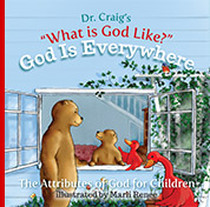
For example, Dr. Craig is publishing a series of wonderful children’s books on the attributes of God. So far, I love them all and look forward to reading them to my (future) children and my (present) kids in the church. All of them, that is, except the God is Everywhere book. In it, the anthropomorphized father-bear explains God’s omnipresence in the following way:
“Since God doesn’t have a body, He isn’t really in any place at all.

"When we say God is everywhere, we mean that He knows what is happening everywhere in the whole world and that He is making things happen everywhere in the whole world.”
That is wrong. True, God is spirit and transcendent, but he is also immanent. He is not merely aware of everything that’s happening, but he is also everywhere.

Here’s what a standard systematic theology book would say:
Omnipresence. God is everywhere present at the same time in essence, awareness , and power (Ps 139:7-12). This related to His immensity; His being fills all (1 Kgs 8:27; Jer 23:24).1

(And of course, we affirm that God is both present in and distinct from all of creation.)

I like Craig for philosophy and apologetics. I'm not too keen on his theology here.

Does that mean I don't like William Lane Craig and reject everything? By no means! But what it does mean is that we must always think critically (even when reading authors with a similar worldview) and just have the clarity of mind to be able to say, "I agree with this," or "I don't agree with this," or "I never thought about it like that, let me look into this further."

In fact, I can’t think of any one of my mentors or favorite authors with whom I agree on every last one of their views. But I still am learning from Dr. Craig because on most primary and secondary issues we agree. The tertiary issues are important, but I’m comfortable enough to respectfully disagree when I need to. (And thrilled to host a simulcast Dr. Craig debate showing at the Orchard Church next week!)

And the same is true for you. If you find yourself agreeing all the time with the things any teacher  says, you’re probably not using the wonderful gift of discernment God gave you.

. . . and by the way, that goes for me too. I hope you, and my congregation disagrees with me from time to time . . .

(. . . and I hope those disagreements are only over tertiary issues!)


1Holloman, Henry. Kregel Dictionary of the Bible and Theology. Grand Rapids: Kregel Acedemic & Professional, 2005.

2 Comments
<<Previous
Forward>>

    RSS Feed

    Picture

    Categories

    All
    Adoption
    Art
    Axiom
    Beowulf
    Christmas
    Comics
    Drabble
    Flash Fiction
    Foster Care
    Good Friday
    Humor
    Infertility
    Interviews
    Memes
    Music
    Politics
    Practical
    Prayer
    Preaching
    Reviews
    Speculative
    Theology
    Tragedy
    Trinity Watch
    Untold Podcast
    Video
    Writing

    Blog Roll

    Breakpoint
    Christian Humanist
    Christian Geek Central
    Critical Press Media
    David N. Alderman
    Doug Geivett

    Good Book Blog
    Living With Cogan
    Open Biola
    Project Rooftop
    Reasonable Faith
    Running Slowly w/ Kids
    Spirit Blade Underground
    Strangers and Aliens
    The Table Podcast
    This Old Farmhouse

    Archives

    September 2025
    May 2025
    March 2025
    November 2023
    August 2023
    February 2023
    May 2022
    April 2022
    March 2022
    November 2021
    August 2021
    September 2020
    August 2020
    June 2020
    March 2020
    October 2019
    September 2019
    February 2019
    October 2018
    September 2018
    April 2018
    March 2018
    February 2018
    December 2017
    August 2017
    July 2017
    June 2017
    March 2017
    January 2017
    December 2016
    November 2016
    October 2016
    July 2016
    June 2016
    February 2016
    November 2015
    October 2015
    September 2015
    August 2015
    June 2015
    May 2015
    April 2015
    March 2015
    February 2015
    January 2015
    December 2014
    November 2014
    October 2014
    September 2014
    August 2014
    July 2014
    June 2014
    April 2014
    March 2014
    February 2014
    January 2014
    December 2013
    November 2013
    October 2013
    September 2013
    August 2013
    July 2013
    June 2013
    May 2013
    April 2013
    March 2013
    February 2013
    January 2013
    December 2012
    November 2012
    October 2012
    September 2012